



LUC sponsors national climate planning guide for local authorities
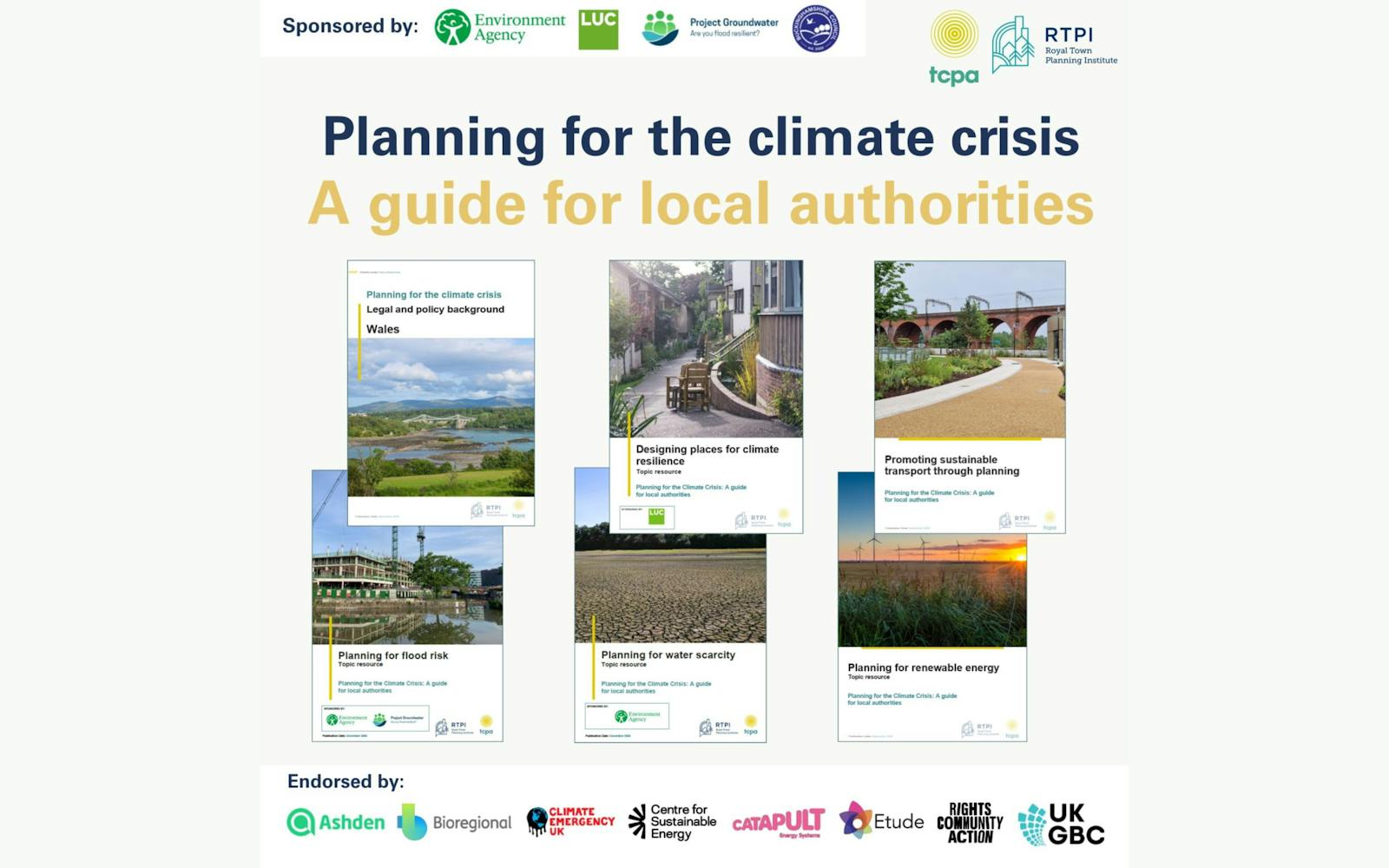
LUC was proud to sponsor the fifth edition of Planning for the Climate Crisis, the Town and Country Planning Association’s national guide for local authorities, produced with the Royal Town Planning Institute.
The publication arrives at a pivotal time, with planning playing an increasingly important role in responding to climate change.
The guide launched through a national webinar on 10 December, which brought together planners, councillors and built environment professionals from across the UK.
Speakers from the TCPA, RTPI and Winchester City Council reflected on how planning policy can drive meaningful climate action, including insight from work on Winchester’s emerging Local Plan.
A refreshed guide for a changing policy landscape
This edition introduces a new digital format built around topic resources.
The guidance spans all four devolved nations and covers priorities including climate mitigation, climate adaptation, transport, energy, buildings, flood risk, coastal change and overheating.
The structure aims to make the guidance easier to use in practice, supporting ambition alongside delivery.
LUC case study: Glasgow Claypits
As sponsor, LUC contributed a case study on the transformation of Glasgow Claypits from a neglected post-industrial site into a climate-resilient urban nature reserve. The project integrates wetlands and swales to manage surface water, reducing flood risk for the site and adjacent developments.
A diverse mosaic of habitats, including woodlands, wildflower meadows and open water, helps regulate urban temperatures and supports biodiversity, ensuring ecological networks remain robust under changing climate conditions.
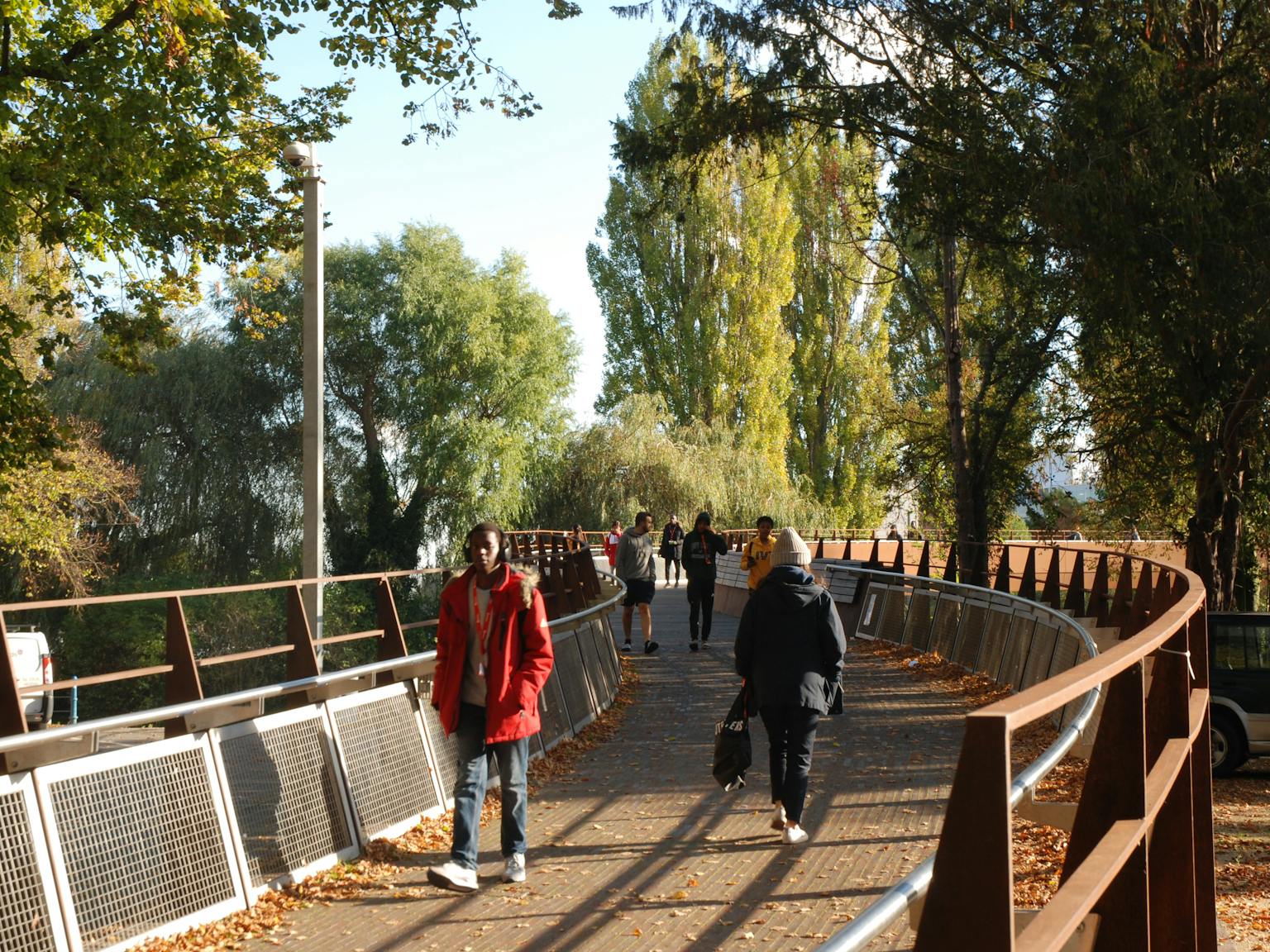
Paths, boardwalks and recreational spaces were designed to be adaptable, providing community access even during periods of heavy rainfall or variable water levels. Early collaboration with Scottish Canals, Glasgow City Council, Historic Environment Scotland and local stakeholders ensured the interventions were both ecologically effective and socially valuable.
The site demonstrates how nature-based, adaptable design solutions can address climate challenges while providing long-term benefits for people and wildlife, offering a replicable model for urban regeneration projects elsewhere.
“Local authorities play a critical role in addressing the climate crisis through planning. This guide provides timely, practical support for planners working to turn ambition into action. We were pleased to support its launch and to contribute learning from Glasgow Claypits, which shows how landscape-led design can deliver climate resilience and social value together.”
Sarah YoungExecutive Director for Planning at LUC
Learn more
The guide is available through the TCPA website alongside a recording of the launch webinar.
LUC encourages local authorities and practitioners to explore the resource and apply its principles in practice.
Recent news
Place North West features Melissa Kurihara
Place North WestPress, 15 January 2026 Instagram, 4 December 2025
🌍 Thank you to everyone who joined our Mapathon. Whether you participated online or in the office, your efforts made a real impact. Together, over 40 attendees mapped 4,727 buildings in northern Côte d’Ivoire, where Médecins Sans Frontières is supporting refugees.
LinkedIn, 24 November 2025