




Scotland’s geese and Overhead Power Lines
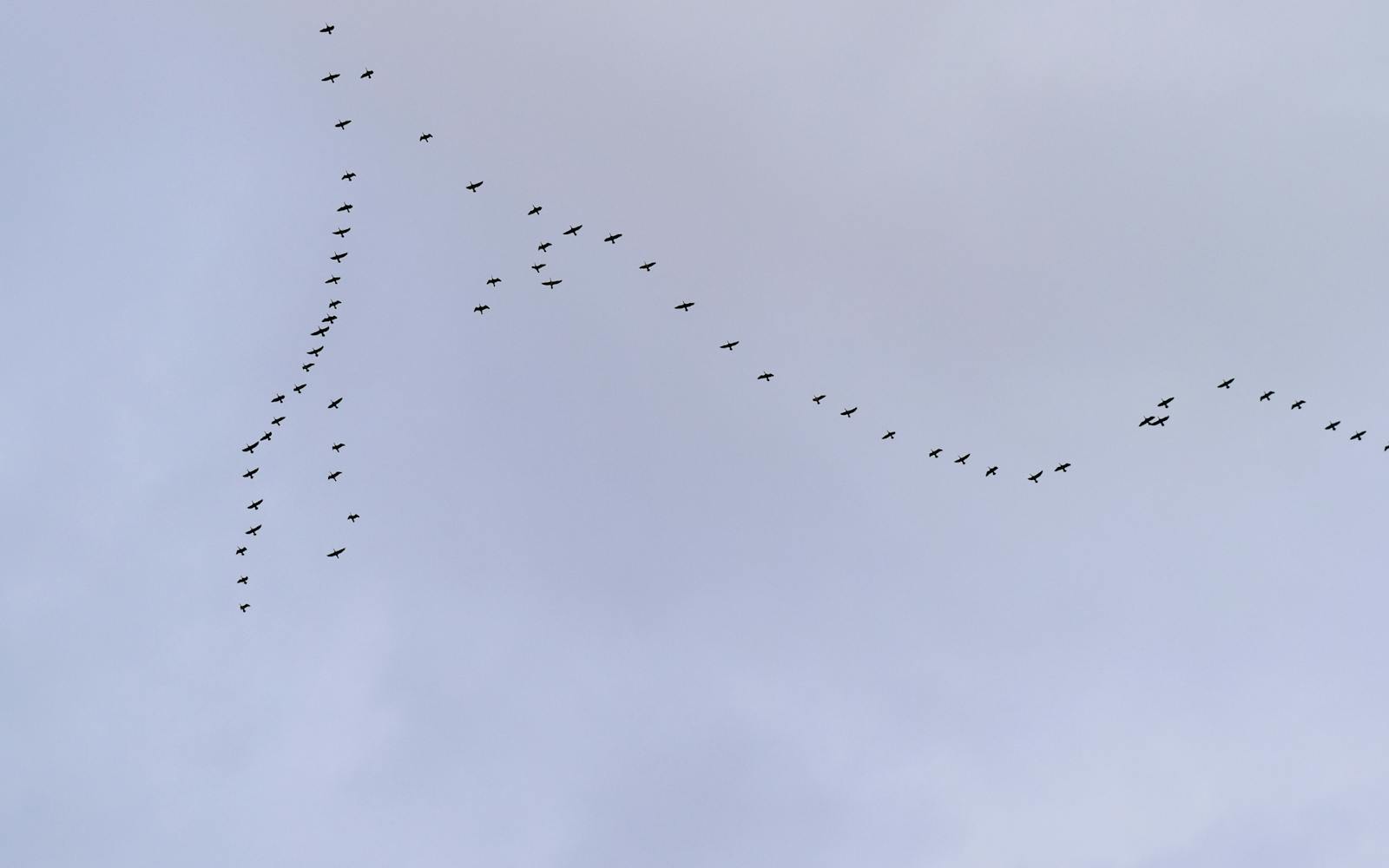
With winter on our doorsteps, you may have started to notice large flocks (skeins) of geese flying overhead. These birds have likely just come from summer breeding grounds in the Arctic and Sub-Arctic Circle and will join us in Scotland to avoid the harsh polar winters. Several species stay here until spring, taking advantage of the mild climate, large tidal estuaries, and abundant agricultural land to feed and rest.

Scotland’s winter guests
The UK hosts over a million geese through winter, representing a significant proportion of the global population for some species (Frost et al., 2019). How we protect and conserve these birds, particularly in light of the biodiversity crisis, is an important consideration for their global survival. As climate change advances, balancing climate change and biodiversity concerns is a challenge for developers and decision-makers.
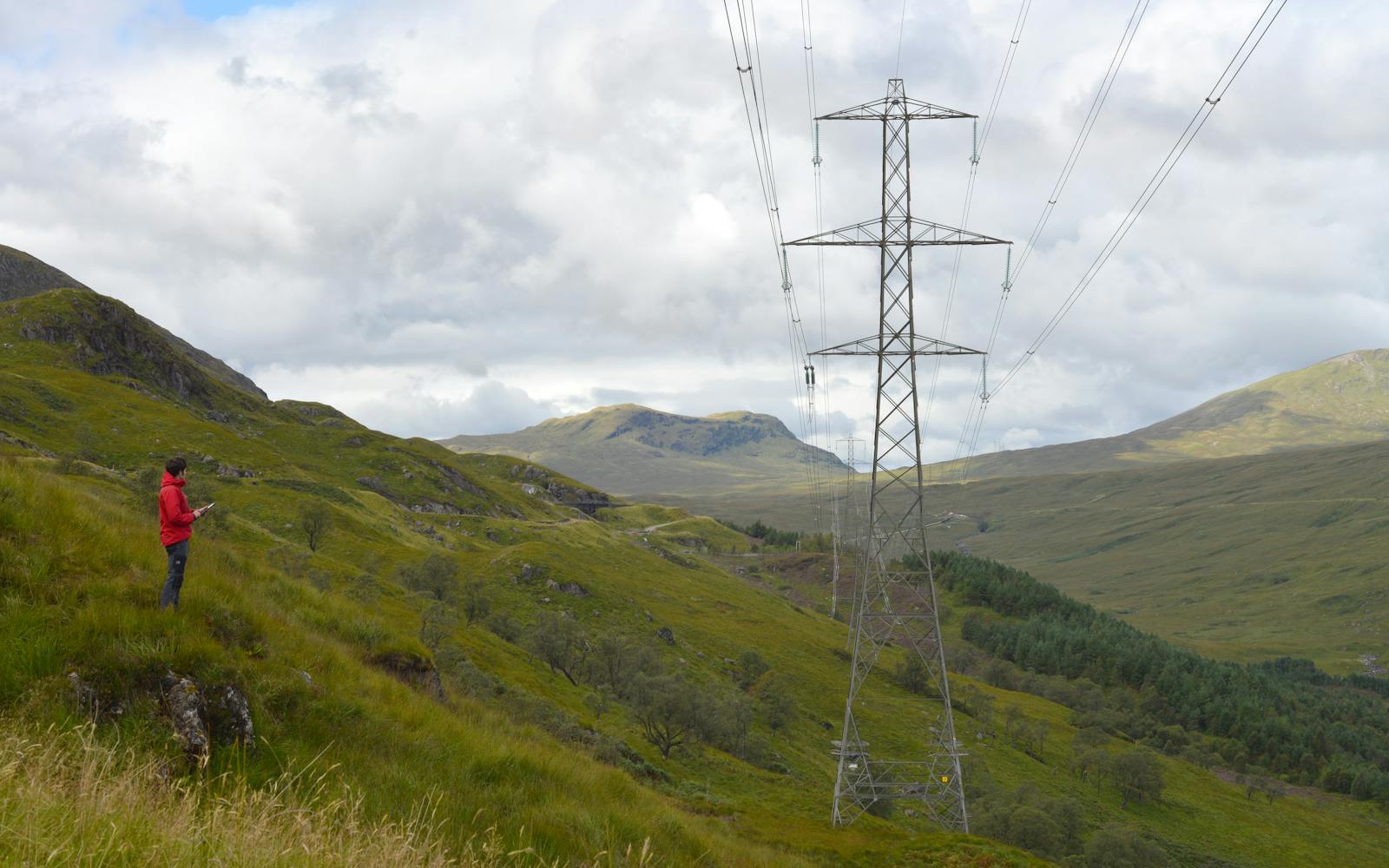
An example of this challenge is Scotland’s push to expand renewable energy generation, a vital step towards achieving its net-zero target. Overhead power lines are key to this expansion, but can displace or pose a collision risk to some bird species, particularly geese. Greylag geese (Anser anser) and pink-footed geese (Anser brachyrhynchus) are among the species most at risk. Both species make extensive seasonal movements, with Scotland hosting internationally important populations.
Species at risk: pink-footed and greylag geese
Our wintering population of pink-footed geese comes from Iceland and Greenland and can congregate in their tens of thousands. Like us, they sleep at night and feed during the day with habitual regularity, often visiting the same areas within and between years. They typically roost on reservoirs, lochs, and estuaries, out of reach of predators such as foxes, and take off around dawn on direct flights towards favoured arable and pastoral fields to feed, returning to their roost sites at dusk. These large flocks create spectacular displays at dawn and dusk as they travel between feeding and roosting sites. Still, this routine of ‘commuting’ means that an obstruction in their flight path, such as an overhead line, can lead to collisions, particularly when visibility is low.
Greylag geese, once purely migratory, are increasingly becoming year-round residents in Scotland due to milder winters and changes in land management practices. They breed across the UK and further north in Iceland, with Scottish populations swelling in autumn and winter as more birds arrive from their northern breeding grounds.
Assessing risk
LUC has been involved in several overhead line developments, providing guidance on how to best avoid or mitigate the collision risk for geese. The first step is to gauge whether geese will be present at the site of a proposed development. Although widespread, not all areas are suitable for geese, and upland or densely urbanised areas are unlikely to provide suitable habitat. Conversely, some areas are recognised for their importance for geese and are designated as Special Protection Areas (SPAs), providing statutory protection against activities that could harm their populations.
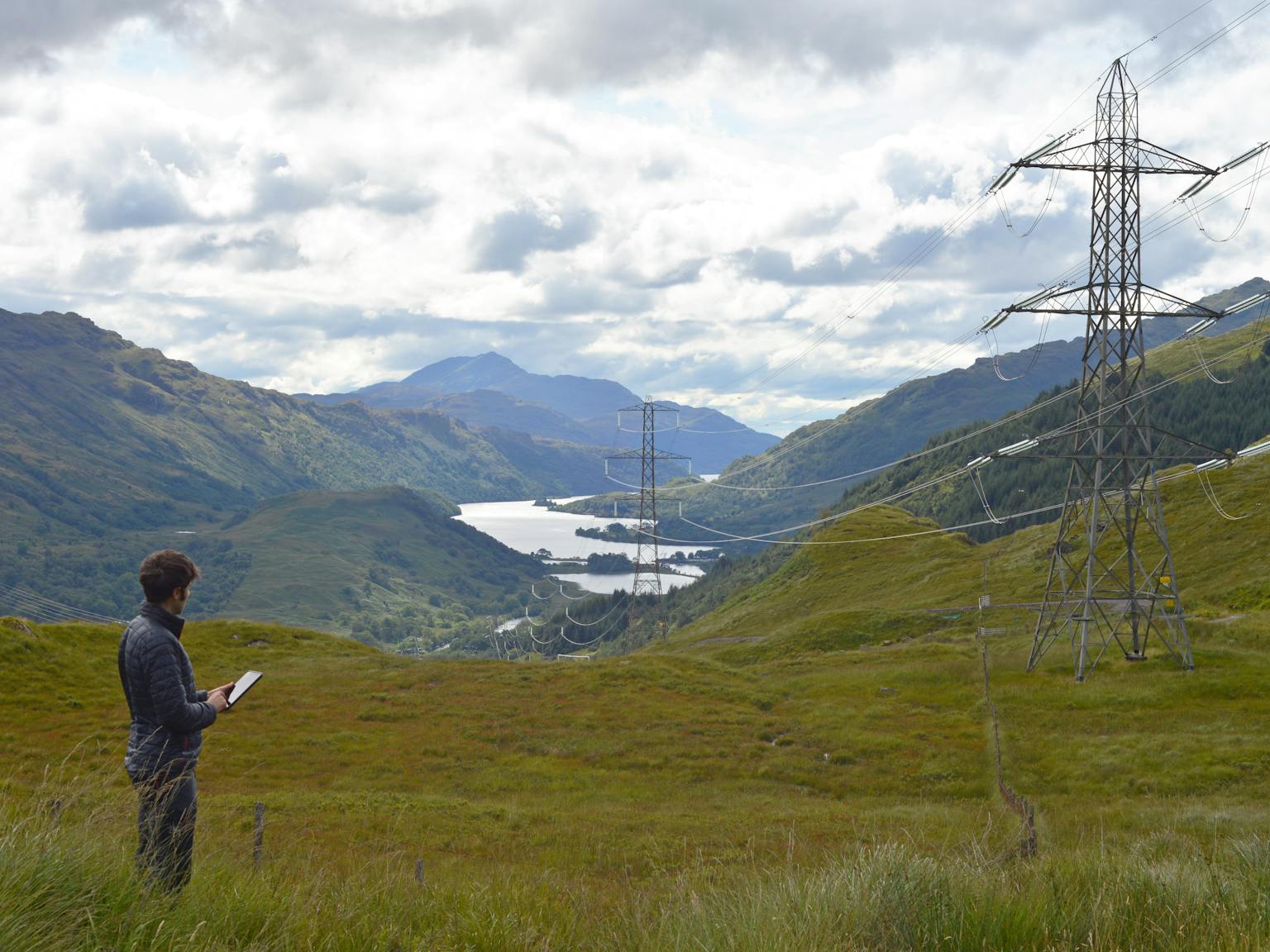
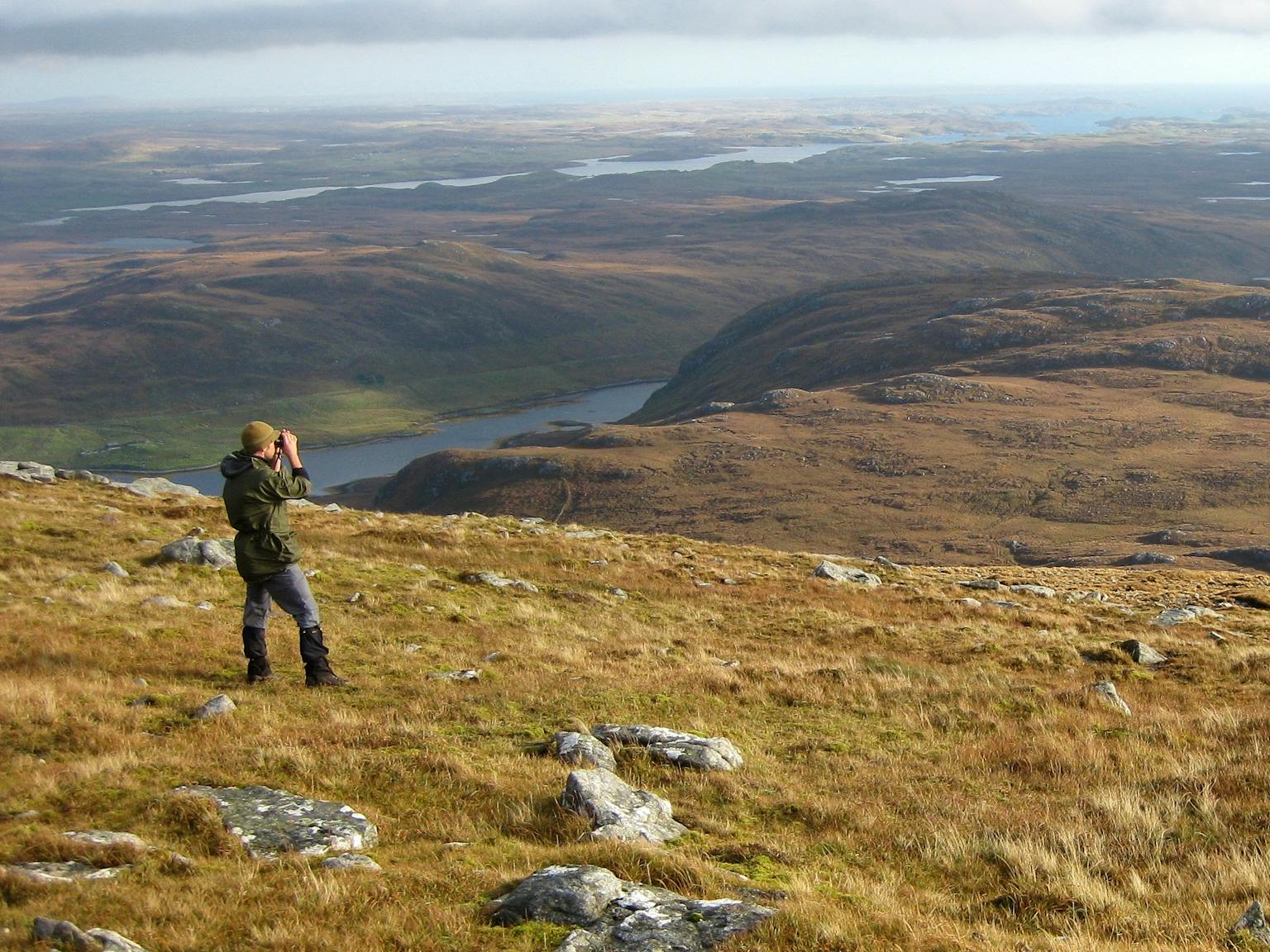
The next step is to carry out fieldwork to capture data on foraging habits, flight directions, flight heights, and the frequency of flight crossings over existing or proposed power lines. One way of collecting this data is to carry out standardised static watches at several locations along the proposed development at varying times of day and month. Surveyors record passing flocks by identifying the species, counting the number of individuals, mapping their flight, and estimating their height above ground. Collating the data from these watches helps paint a picture of where the geese typically fly (habitual routes often termed ‘flight corridors’) and highlights any areas with significant foraging or roosting activity. The data could also be used in a Collision Risk Model to predict the number of bird strikes per year if the overhead line were developed.
An additional data collection method involves wider, landscape-scale surveys to record the location and size of flocks as they are observed in the air or feeding on the ground, providing insights into favoured feeding areas and thus likely flight paths to and from known roost locations.
Mitigation strategies
The next question is how this data can inform the proposed overhead line design and reduce its potential impacts on geese. In early design phases, several route options are typically considered, and survey data can help highlight which routes are likely to pose a greater collision risk. By avoiding key roosting, feeding, and flight corridor areas, developers can significantly reduce the risk of disturbance and collisions.
Where areas of high flight activity are unavoidable, Bird Flight Diverters (small, reflective or brightly coloured markers attached to power lines) increase the lines’ visibility to birds and are proven to reduce collision risk. Some BFD designs can reduce the number of bird strikes by up to 70% (Ferrer et al., 2020), but it should be noted that BFD efficacy can vary depending on habitat, weather, and the bird communities concerned.
Looking ahead
The UK is uniquely placed on the western edge of Europe with an unusually mild climate for its latitude. Among other factors, this placement attracts globally significant populations of wintering geese, a feature we must celebrate and conserve. Still, climate change marches on and the urgency to act must be recognised. Over the next decades, Scotland will see large changes to its overhead line network as it steers energy transmission away from fossil fuels to renewable energy generation. How we can reach our net-zero targets while not losing sight of more immediate threats to biodiversity will take careful deliberation and planning, but it is a challenge decision-makers and developers are obliged to take on, and LUC are well-placed to help with.
I encourage you to take a moment the next time geese pass overhead and wonder how far they have travelled. Remember, the fact that geese choose to join us through our darkest and coldest months of the year is a comforting reminder that Scottish winters could always be worse.
Frost, T., Austin, G., Hearn, R., McAvoy, S., Robinson, A., Stroud, D., Woodward, I. & Wotton, S. (2019). Population estimates of wintering waterbirds in Great Britain. British Birds (112) pp. 130-145.
Ferrer, M., Moradini, V., Baumbusch, R., Muriel, R., Lucas, M. & Calabuig, C. (2020). Efficacy of different types of “bird flight diverter” in reducing bird mortality due to collision with transmission power lines. Global Ecology and Conservation (23) e01130.