
Unlocking the potential of Irish towns
Ireland’s towns are undergoing rapid and transformational change. Faced with a growing population driven by a natural increase and strong net immigration, a strong economy and employment, regional inequalities, and the urgent need to address climate change, the Irish government is investing heavily in the regeneration of Irish towns and cities. These efforts aim not only to meet housing and infrastructure demands but also to build more sustainable, inclusive, and vibrant communities. Dublin now accounts for over 28% of the national population, and peripheral towns have long lagged in investment.
Drivers of regeneration
Two national policy drivers are shaping this transformation. Ireland 2040, the overarching planning framework, promotes compact, sustainable growth and sets out a vision for balanced regional development. It recognises that growth needs to move beyond Dublin and into underinvested towns and cities across the country. The Climate Action Plan charts Ireland’s course towards net zero by 2050, emphasising sustainable transport, energy-efficient development, and the protection of Ireland’s natural assets. In practice, this means that investments into towns and infrastructure must also deliver lower emissions and resilience against climate impacts.
As a result, regeneration initiatives are taking root in both rural and urban areas. Programmes like the Urban Regeneration Development Fund (URDF) and the Rural Regeneration Development Fund (RRDF) are enabling investment at an unprecedented scale. Both funds explicitly prioritise sustainable placemaking – such as tackling housing need, bringing brownfield land back into meaningful use, combatting urban sprawl, revitalising town centres, restoring heritage assets, improving active travel infrastructure, reducing the dominance of motor vehicles and enhancing public space – to drive economic recovery and community well-being. Taken together, they aim to reverse decades of underinvestment and unlock opportunities for long-term economic and social benefit. Both funding streams seek to ensure that urban and rural areas in Ireland can become attractive and vibrant places in which people can live and work, as well as invest and visit.
The national Town Centre First policy further targets smaller towns: 26 “pathfinder” towns have been chosen to create masterplans. These plans put communities at the centre of rejuvenating urban cores, tackling dereliction and vacancy, and making places attractive to live, work, and visit.
LUC's involvement
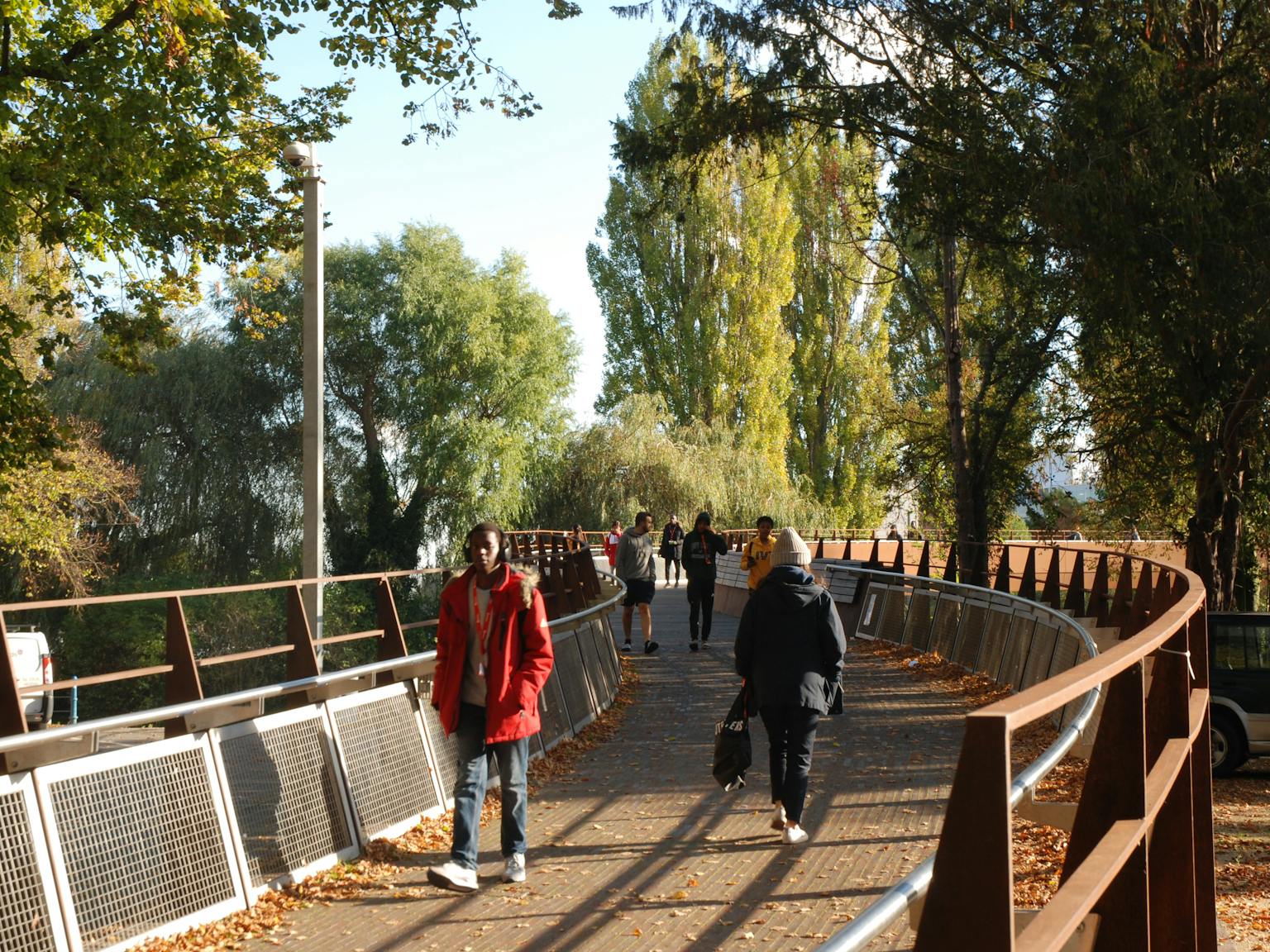
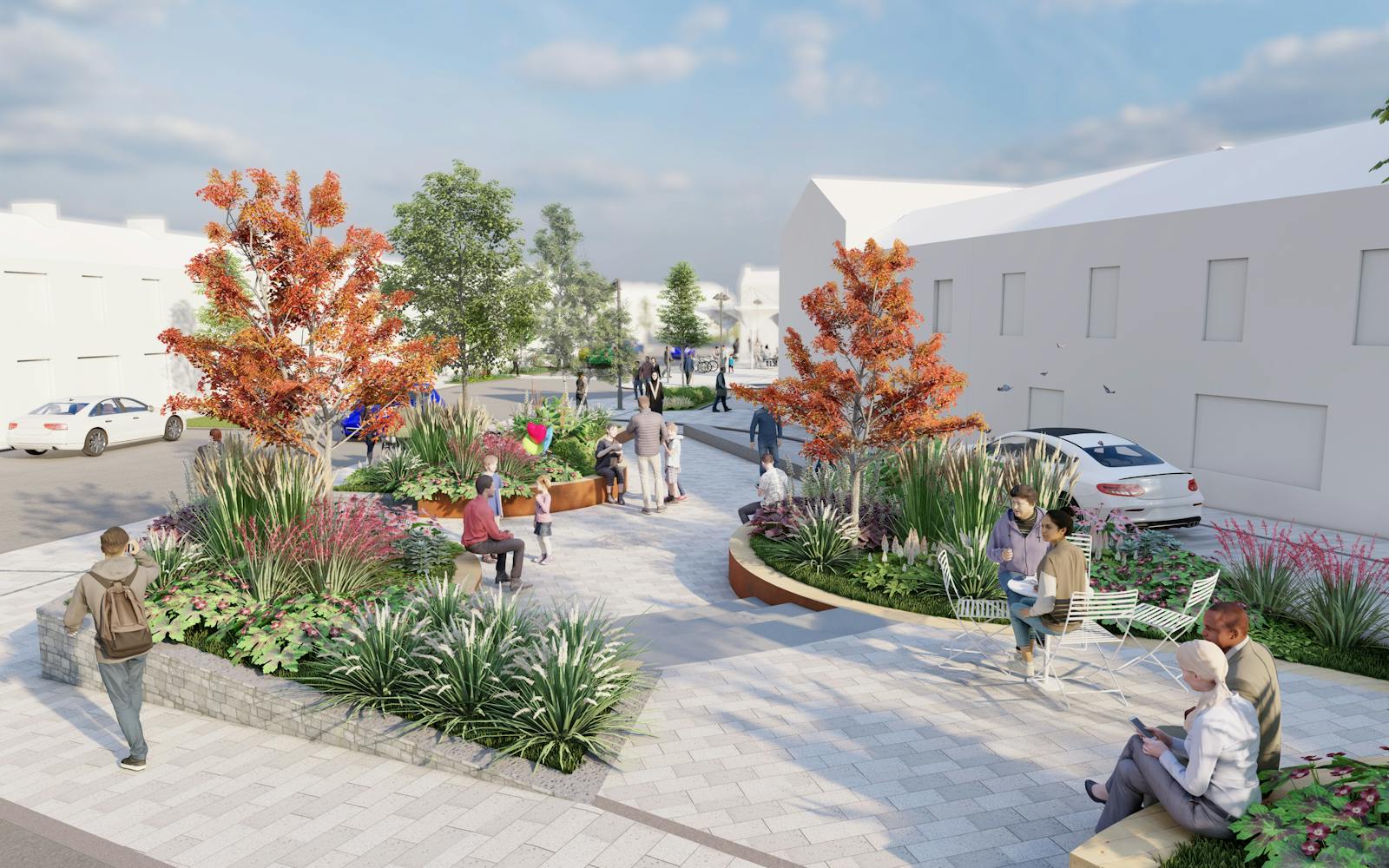
LUC is involved in delivering this transformation across Ireland. Our work spans design, planning and engagement, and covers both strategic masterplans and town and city centre public realm enhancement projects. One key strategy for reinvigorating towns and cities is upgrading their public realm – streets, parks and civic spaces – to create more walkable, vibrant and green urban centres that encourage social interaction and rebalance the needs of people over cars.
Reimagining public space in Roscommon town centre
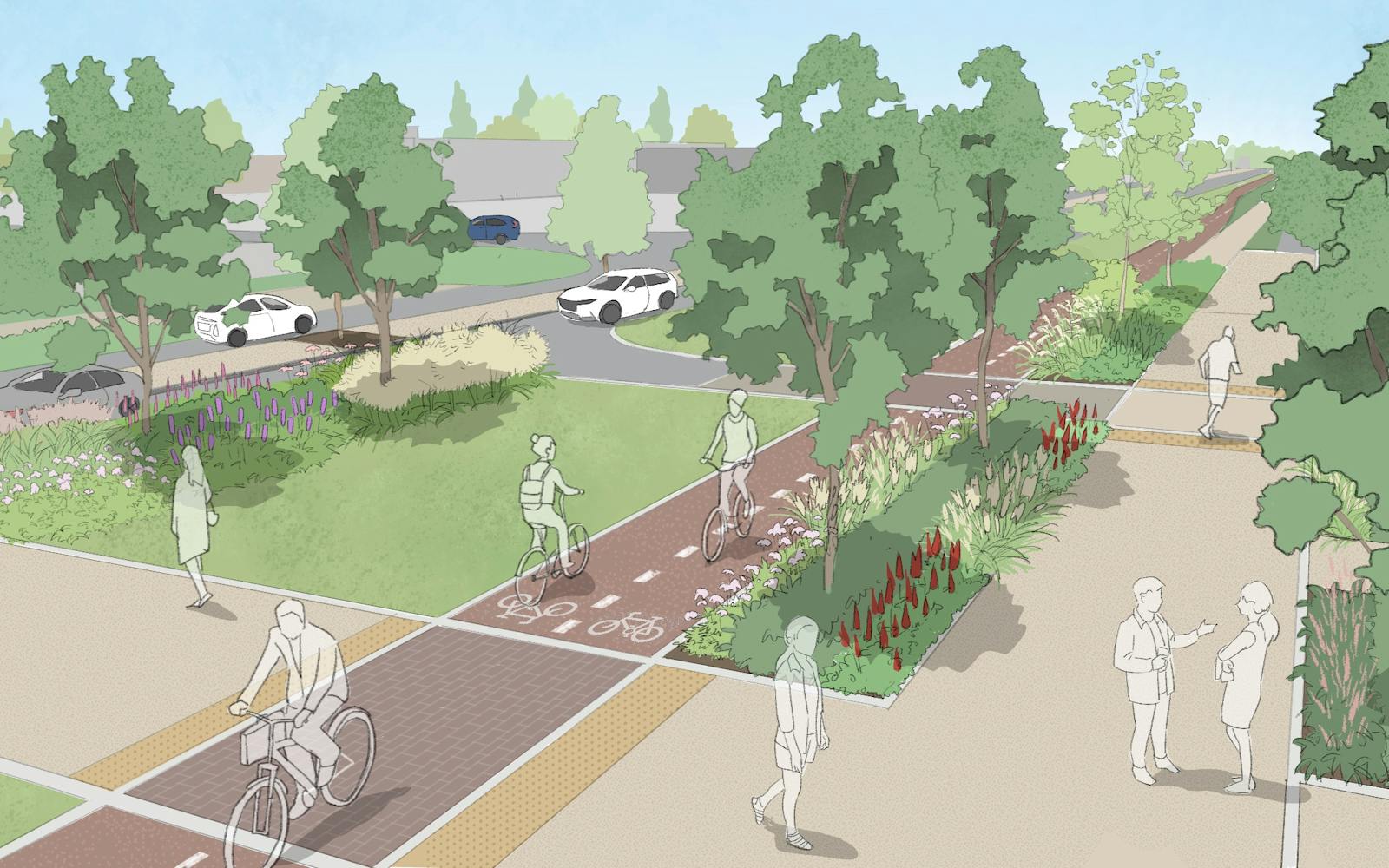
Our work in Roscommon is a strong example of how public realm design can support urban regeneration. LUC was appointed by Roscommon County Council in 2021 to lead on the landscape and urban design for a €13 million town centre transformation. Like many Irish and UK towns, Roscommon centre was suffering as a result of out-of-town centre retail development, internet shopping, and COVID-19. Low-density out-of-town centre development has also impacted the town and created issues such as high car use and congestion in the town centre.
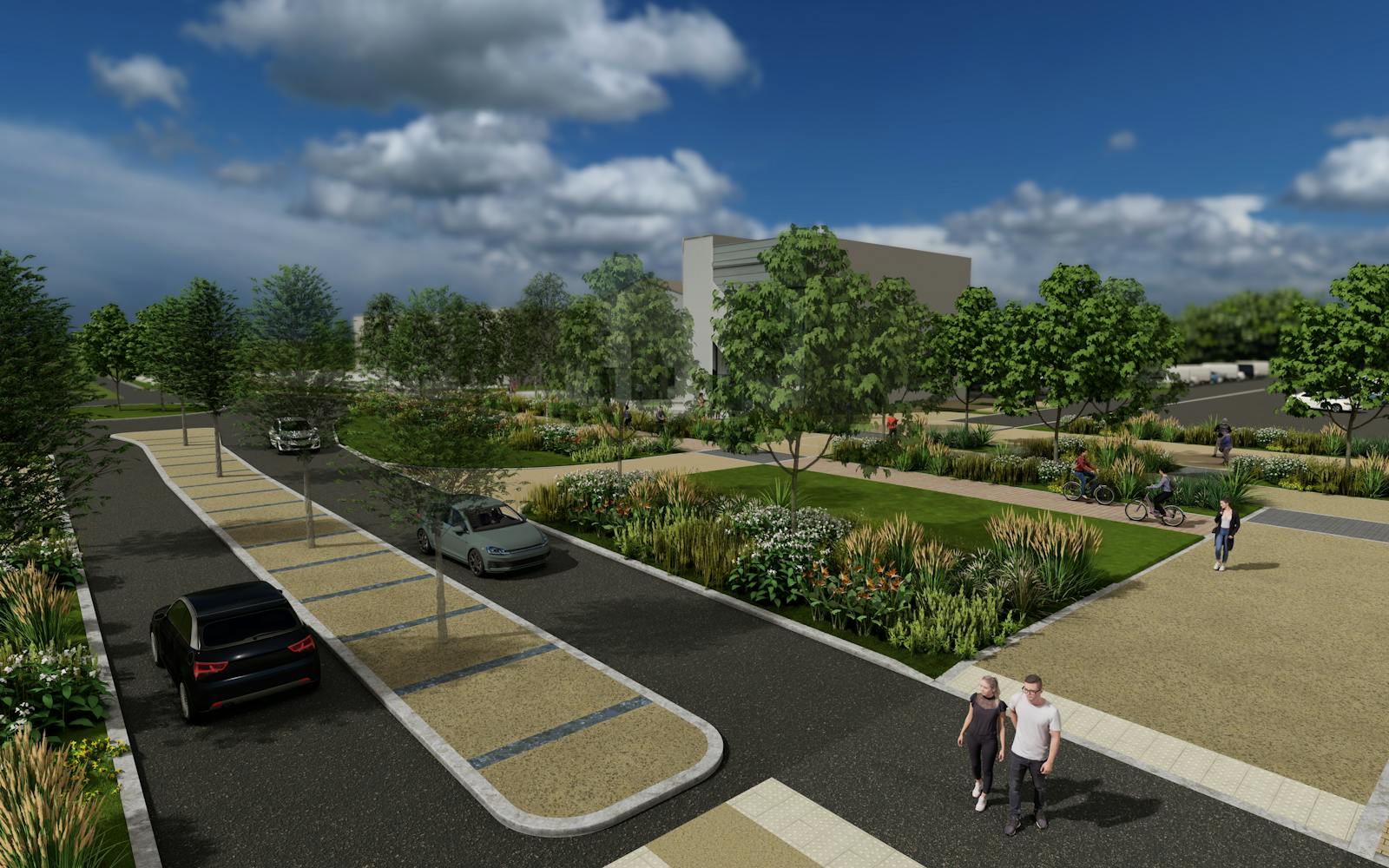
The project aims to make the town more connected, people-friendly, walkable and sustainable. Key interventions include new civic spaces, street enhancements, improvements for pedestrians, an integrated cycling infrastructure, a new urban park, and the rationalisation of parking in the town centre. Urban greening, tree planting and recreational facilities are central to the proposals, encouraging more people to live and spend time in the town centre. 6,000m2 of existing grey infrastructure will also be converted into green infrastructure along the circular road, and 3,000m2 of new rain gardens and nature-based drainage solutions will be created as part of the linear park.
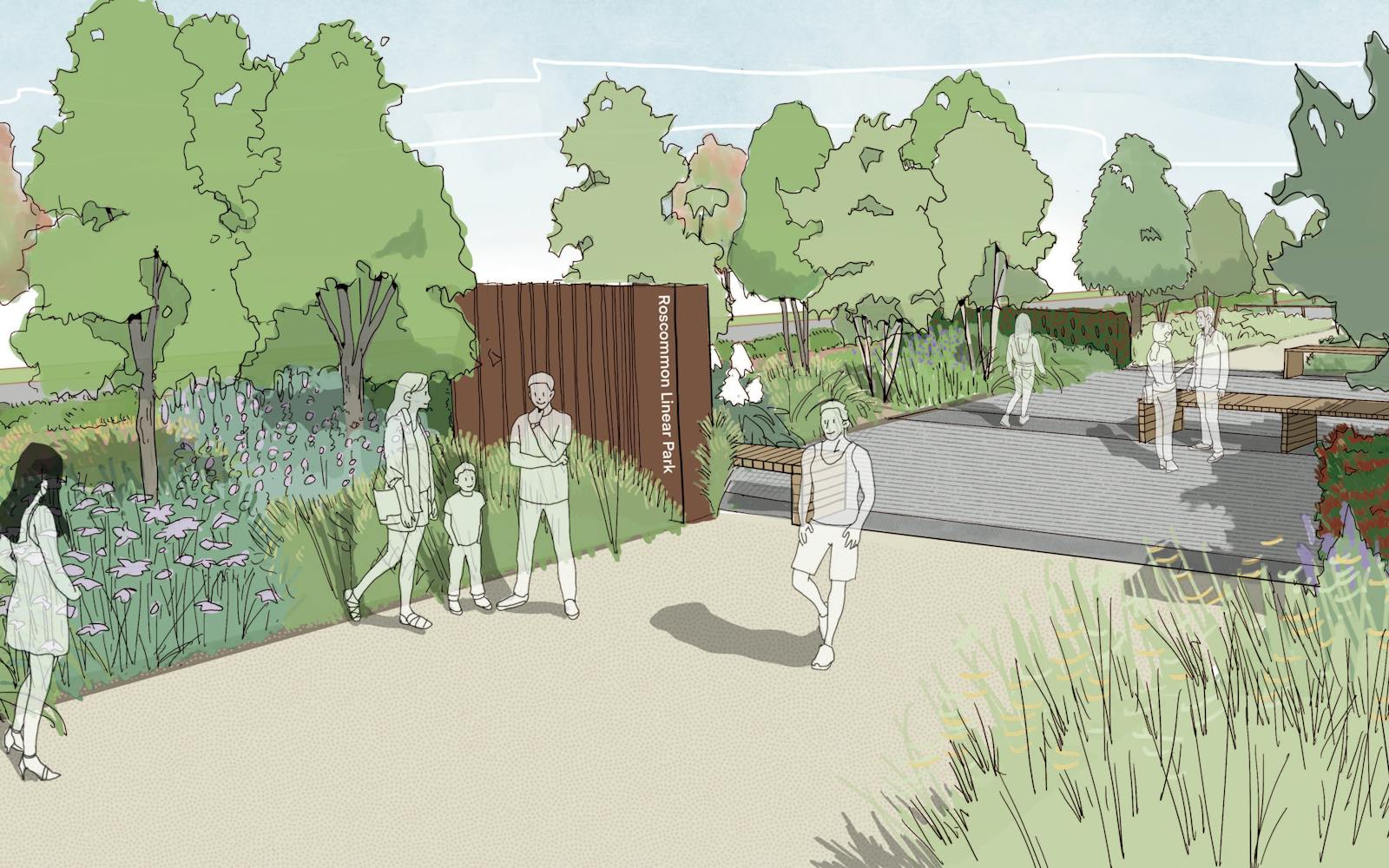
The plan reconnects Roscommon’s historic core with its outer areas, reviving traditional outdoor functions for streets and public spaces. The vision is an adaptable, high-quality, socially inclusive town centre. In short, thoughtful public-realm design can make a town centre safer, greener and more attractive, reinforcing local identity and making towns better places to live and invest.
Empowering communities through town centre first planning
As well as town centre enhancement projects, broader urban design principles and a more holistic masterplanning approach are being adopted to reshape Irish towns. Many of Ireland’s towns are preparing Town Centre First plans. These long-term strategies seek to integrate transport, land use, community facilities and environmental enhancements, and are developed in close partnership with local people. LUC has supported a number of towns through this town centre first process, including Tubbercurry, Blessington, Killala and Athenry.
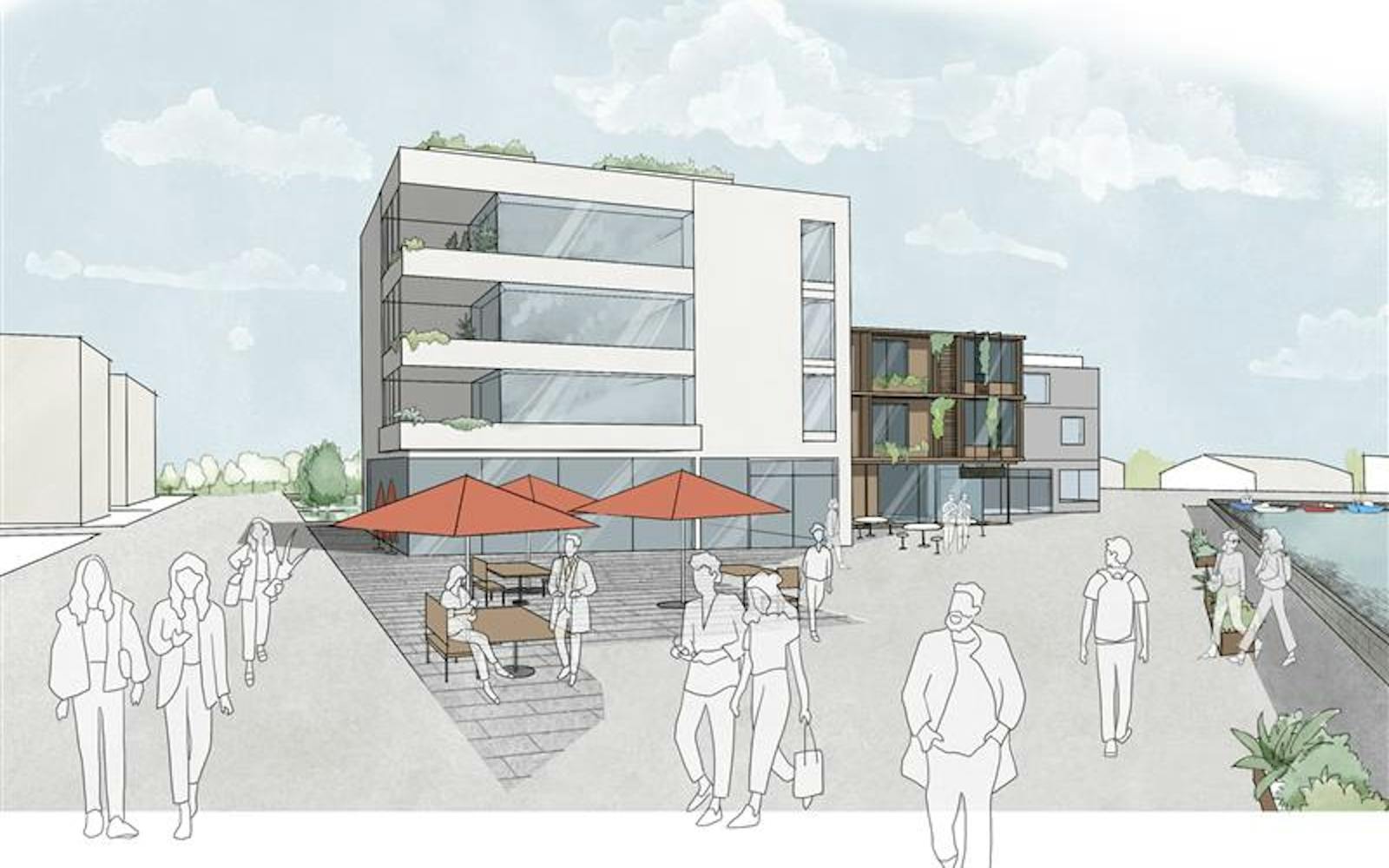
In Tubbercurry’s vision for an exciting and sustainable town, community involvement was fundamental. Residents took part in workshops, discussing how to create a blueprint for a more attractive, functional and economically viable centre benefitting residents, businesses, and visitors. Through this process, 42 ideas emerged and were distilled into nine priority projects. These include proposals for public space improvements, revitalising shopfronts, the reuse of vacant properties, and new community amenities. The community-led ‘Town Team’ now oversees the plan’s delivery, with support from Sligo County Council.
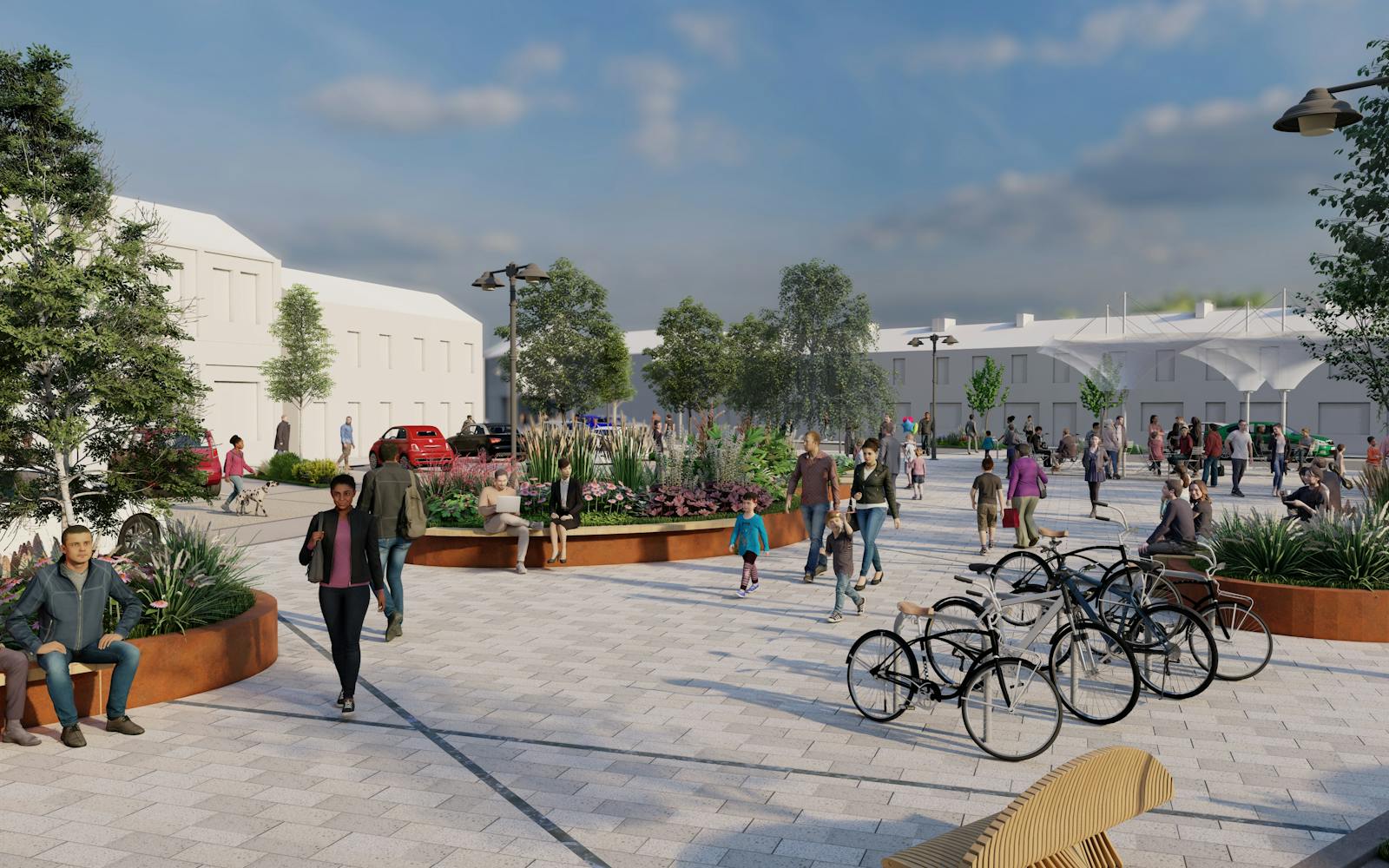
LUC has applied a similar model for Blessington’s town centre first plan, but addressing distinct local challenges. Public consultation highlighted traffic congestion, poor public realm maintenance, a lack of local services, and limited transport connections to Dublin. The community identified needs such as better walking and cycling routes, reusing vacant heritage sites for arts and culture, diversifying retail, and creating new civic spaces. Projects such as a green space network and a proposed town plaza will help bring the plan’s vision to life.
These towns are part of a cohort of 26 “pathfinder” settlements selected to test and lead this national approach. Their experiences demonstrate the value of combining professional expertise with local insight, ensuring plans reflect the real needs and aspirations of the people who live there and ensuring towns have the right plan to become better places to live, work and run a business.
Reviving rural tourism through culture and landscape in Sligo
Beyond town centres, regeneration also means supporting rural economies and celebrating cultural identity. The Yeats Trail in County Sligo is an example of how placemaking and tourism can come together to support rural vitality.
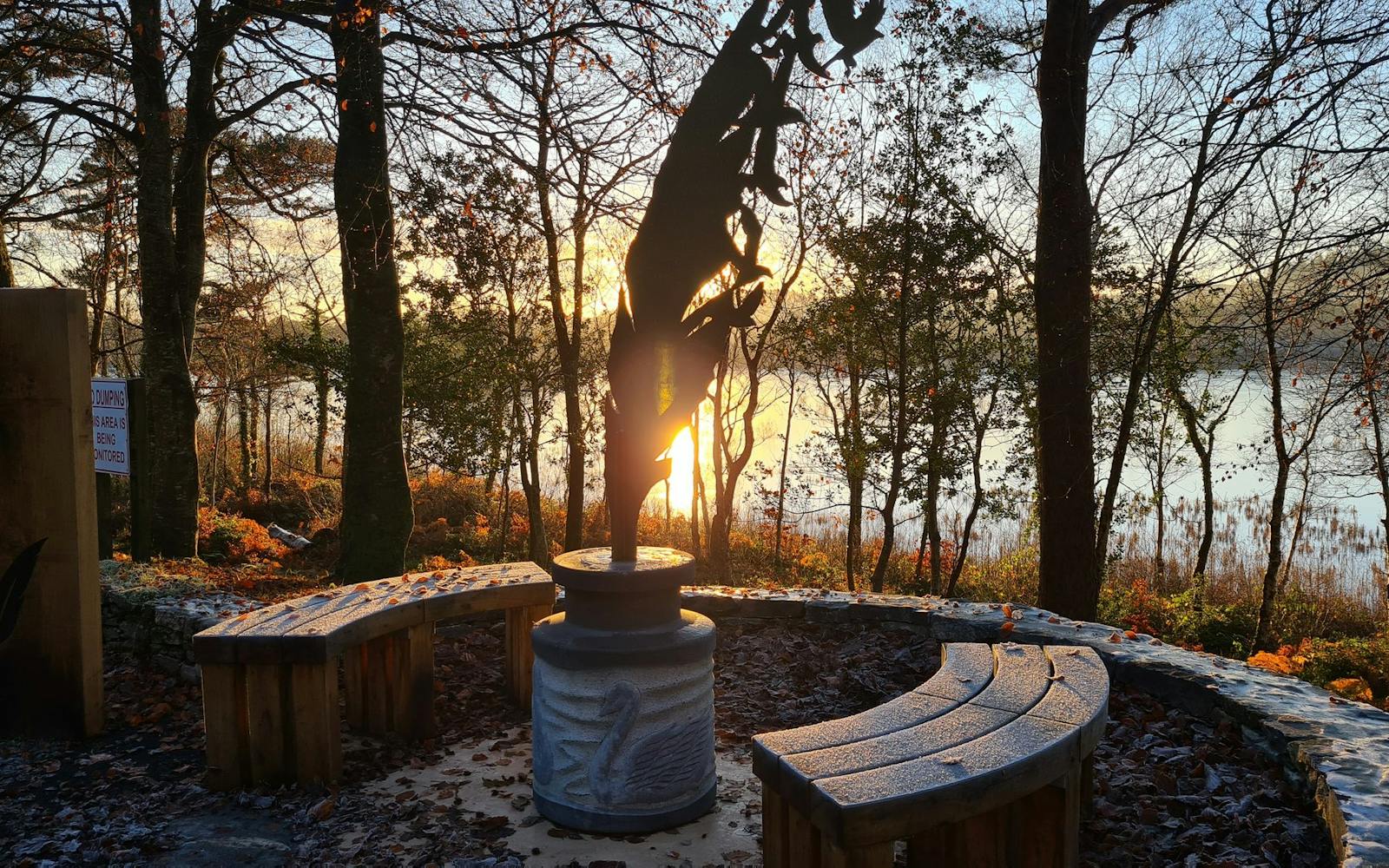
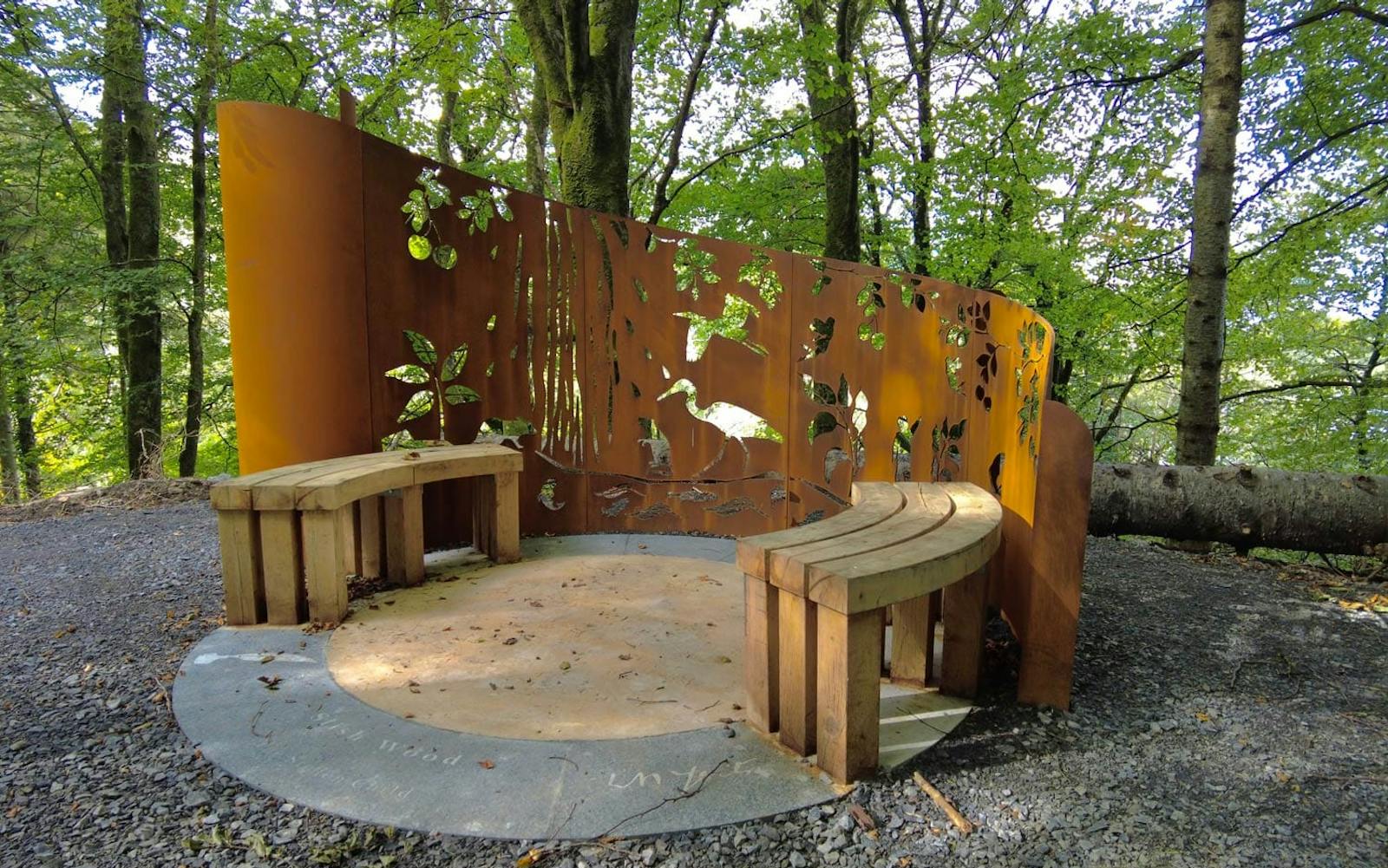
The trail connects sites across the county linked to the poet W.B. Yeats, enriching visitors’ experience while encouraging exploration of the Sligo landscape that Yeats loved and beyond well-known existing destinations. LUC developed interpretive elements, including sculptures, seating, and information panels, all linked to Yeats’s poetry and connecting it back to the landscape.
As well as incorporating Yeats’s poetry, the design approach prioritised low-maintenance, durable materials and a light carbon footprint, ensuring the trail remains in harmony with the environment. This not only safeguards Sligo’s natural beauty but also creates lasting and sustainable tourism, draws visitors, and creates jobs.
Creating sustainable places through joined-up investment
These projects, while varied in context and focus, show how targeted investment and thoughtful design can deliver transformational change for Irish towns and rural communities. They address real challenges: housing need, climate resilience, ageing infrastructure, economic opportunity, and community cohesion. They demonstrate the power of public investment to unlock long-term change focused on local priorities and needs. And they show how good design and urban planning, rooted in place and people, can help Irish towns become more liveable, sustainable and prosperous.
Ireland’s regeneration programme is ambitious and wide-reaching. Many of its towns and cities are now equipped with long-term strategies and funding to drive the delivery of vibrant, resilient places that better serve current residents and future generations alike.